
Why More Ad Budget Won’t Fix Unclear Advertising
Increasing spend can create more activity without creating more certainty. Before scaling, diagnose what the campaign is actually proving.
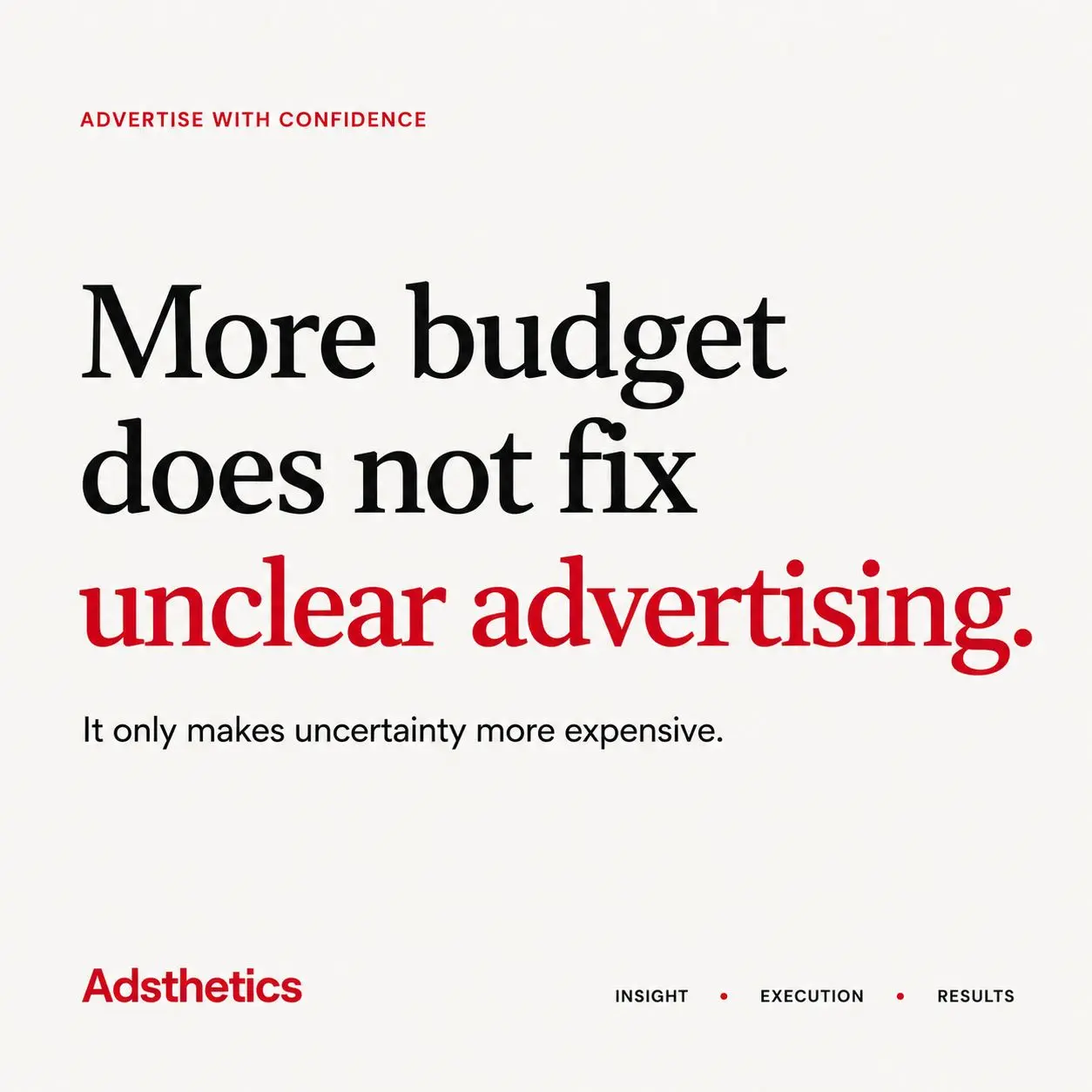
More budget is one of the fastest changes a business can make to an advertising campaign. It is also one of the easiest changes to misunderstand.
When performance feels uncertain, spending more can look like a decisive response. More budget brings more impressions, clicks, traffic and data. The dashboards become busier. The campaign appears to be doing more. But increased activity is not the same as increased clarity.
If the message is vague, the offer is weak, the audience is too broad or the landing page fails to continue the promise, a larger budget simply sends more people through the same unclear system. It does not solve the uncertainty. It makes the uncertainty more expensive.
More spend amplifies what is already there
Advertising spend is an amplifier. When the fundamentals are strong, that is valuable: more of the right people see a relevant message, understand a credible offer and move into a journey designed to help them decide.
When the fundamentals are weak, the same amplifier works against the business. A confusing proposition reaches more people. A poorly qualified audience produces more low-intent clicks. A disconnected landing page loses a larger volume of visitors. The campaign generates more signals, but those signals remain difficult to interpret.
This is why confidence should not begin after a campaign produces an attractive result. Confidence should begin with a clear explanation of what is being tested, why it matters and what each possible outcome will tell the business.
Five questions to answer before increasing ad spend
Is the market responding to the message?
Look beyond the headline click-through rate. Are the right concerns being recognised? Do search terms, comments, page behaviour or sales conversations suggest that the message reflects a real business need? If the market does not understand why the offer matters, greater reach will not correct the message.
Are the right people engaging?
Volume can hide poor fit. Review who is clicking, enquiring and progressing—not only how many. Lead quality, job role, location, purchase intent and sales feedback often reveal whether targeting and creative are attracting the people the business can genuinely help.
Is the offer clear enough to act on?
A strong campaign makes the next step feel logical. The buyer should understand what is being offered, who it is for, why it is credible and what happens after the click. If those answers are difficult to find, spending more only increases the number of people who encounter the same hesitation.
Does the landing page continue the promise?
The page should feel like the next sentence of the advertisement. Message, evidence, imagery and call to action need to support the same decision. A campaign can attract relevant interest and still fail commercially when the post-click experience changes the subject or asks for commitment too early.
Can the business connect activity to a commercial outcome?
Platform metrics matter, but they are not the final answer. Before scaling, connect advertising activity to qualified enquiries, sales conversations, order value, revenue or another outcome that reflects the business objective. Where that connection is incomplete, treat measurement as part of the strategy—not an administrative task after launch.
Activity is not the same as commercial evidence
A campaign can become more active while the underlying decision remains uncertain. More clicks may indicate stronger interest, cheaper traffic, broader targeting or simply a more provocative creative. Each possibility implies a different next move.
Commercial evidence combines platform behaviour with what happens beyond the platform. Useful reviews should bring these signals together:
- The message or creative angle that attracted attention.
- The audience segments and search terms that produced relevant engagement.
- The quality of enquiries, customers or sales conversations.
- The points where people stopped progressing.
- What the campaign has taught the business about positioning, demand and buyer concerns.
The purpose is not to demand perfect attribution. It is to make the next decision better informed than the previous one.
What a campaign that is safe to scale looks like
Not every signal needs to be perfect. Scaling is always a decision made with some uncertainty. The goal is to reduce avoidable uncertainty until the business understands both the opportunity and the trade-off.
Spend with enough clarity to know what the next decision should be.
Confidence in advertising does not come from activity alone. It comes from understanding what that activity means—and building a campaign capable of teaching the business something useful.
Not sure what your advertising is proving?
Ask for a second opinion before increasing spend. We will review the commercial question, the evidence available and the part of the journey creating uncertainty.
Discuss your advertising →