
Plan for Advertising Performance Dips Before They Happen
Not every dip is avoidable, but many are predictable. Set expectations, budget rules and decision criteria before low-attention periods begin.
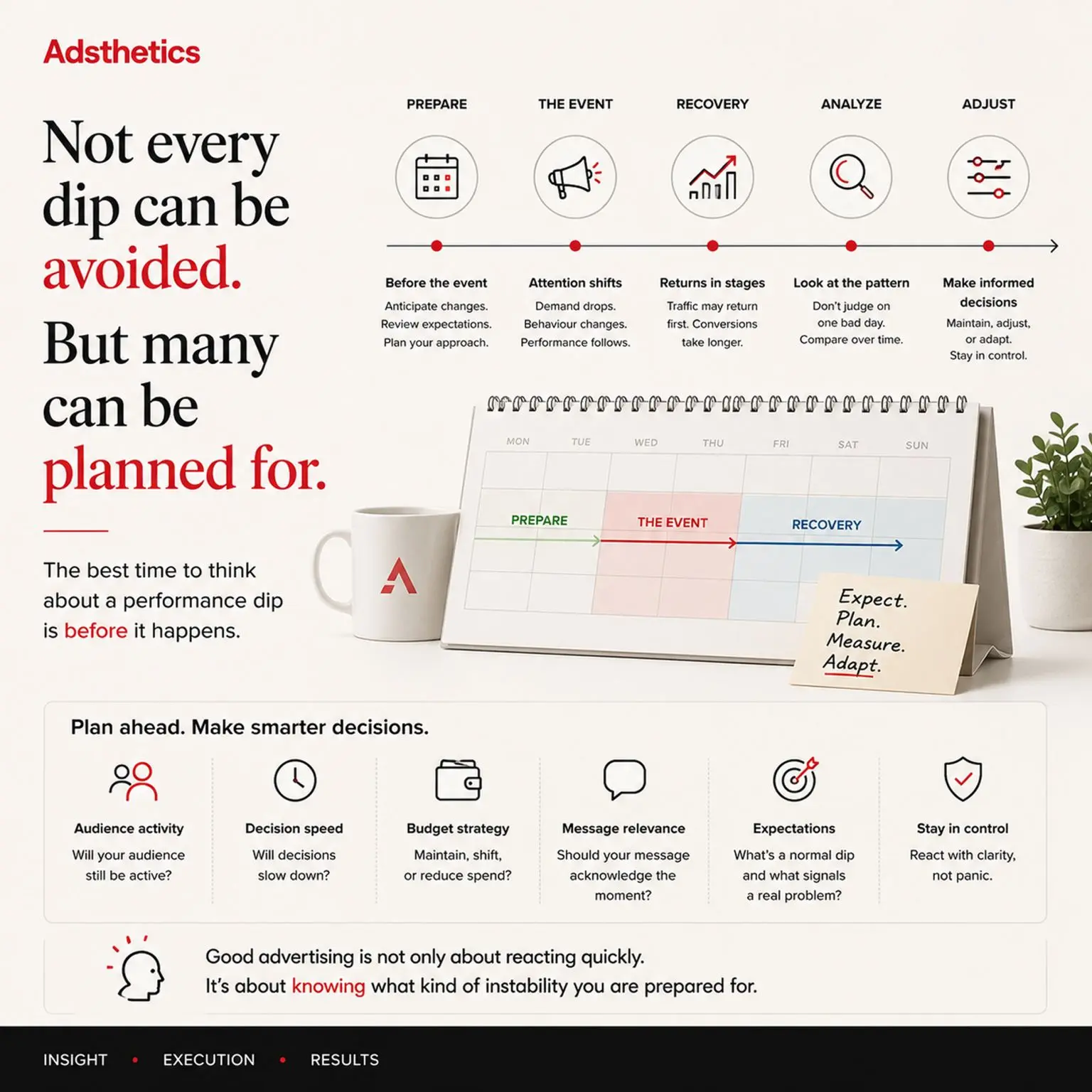
Not every dip is avoidable, but many are predictable. Set expectations, budget rules and decision criteria before low-attention periods begin.
Confidence does not come from expecting complete stability. It comes from knowing what kind of instability you are prepared for.
Predictable moments deserve an advance plan
The best time to plan for a dip is before the dip happens. When it comes to performance dips, it’s best to plan for them before they happen. Events like bank holidays, public events, long weekends, major news cycles, and seasonal holidays may not always result in a break in advertising. But they can impact people's behaviour.
And when it changes, performance usually follows. Some businesses only react once the numbers start dropping. 1. Clicks look unusual. 2. Conversion rates fall.
3. Lead flow slows down. 4. Sales conversations take longer. Here's where the common questions come: Should we pause? Should we reduce spend? Should we change the campaign?
Should we launch something new? However, if the dip reflects a predictable market moment, the better question may have come earlier: What should we expect during this period?
Define the response before the dashboard turns red
Because not every performance drop means the campaign has failed. Sometimes, demand is temporarily lower. Sometimes, attention is somewhere else. Sometimes, people are still interested, but not ready to act.
Sometimes, the top of the funnel keeps working while later stages slow down. That is why planning matters. It’s important for businesses to consider what is realistically possible to change before a period of low attention: 1. Will the audience still be active?
2. Will decision-making slow down? 3. Will conversions take longer? 4. Should budgets stay stable, shift, or reduce? 5. Should the message acknowledge the moment?
6. Should expectations be adjusted before results are judged? Good advertising is not only about reacting quickly. It’s also about understanding when the market is likely to behave differently. Having confidence in advertising doesn't come from expecting complete stability. It comes from knowing what kind of instability you are prepared for.
A practical checklist
Expected audience activity
Estimate whether the target audience will still be browsing, searching and available during the period. Use prior-year data, search trends and business knowledge to distinguish reduced attention from disappearing demand. This informs whether visibility should be maintained or temporarily concentrated.
Likely decision delay
Expect later funnel stages to slow when buyers postpone meetings, internal discussions or purchases. Track whether clicks and enquiries remain relevant even when sales take longer. A delayed decision is different from a lost opportunity and should not trigger the same campaign response.
Budget flexibility
Define how much spend may move, which campaigns should be protected and what evidence authorises a reduction. Budget rules should preserve valuable demand and avoid repeated changes that disrupt learning. Plan the recovery allocation as carefully as the temporary reduction.
Relevant message changes
Identify whether the moment changes urgency, availability or the buyer's immediate concern. Adjust messaging only where the connection is natural and commercially useful. Avoid replacing a proven value proposition with generic seasonal language that attracts attention but weakens intent.
Pre-agreed evaluation window
Agree when performance will be reviewed and which funnel stages should have had time to recover. Compare against an appropriate baseline rather than one exceptional day. A pre-agreed window prevents premature conclusions and makes any later campaign change easier to justify.
The takeaway
Agree what a normal dip looks like, how long to wait, what metrics matter and which changes are authorised. This reduces reactive campaign edits that can make the evidence harder to interpret.
Need a clearer view of what your advertising is proving? Talk to Adsthetics.