
More Clicks Don’t Always Mean More Buying Intent
Click growth can signal attention without signalling commercial intent. The useful question is what visitors do—and who they are—after they arrive.
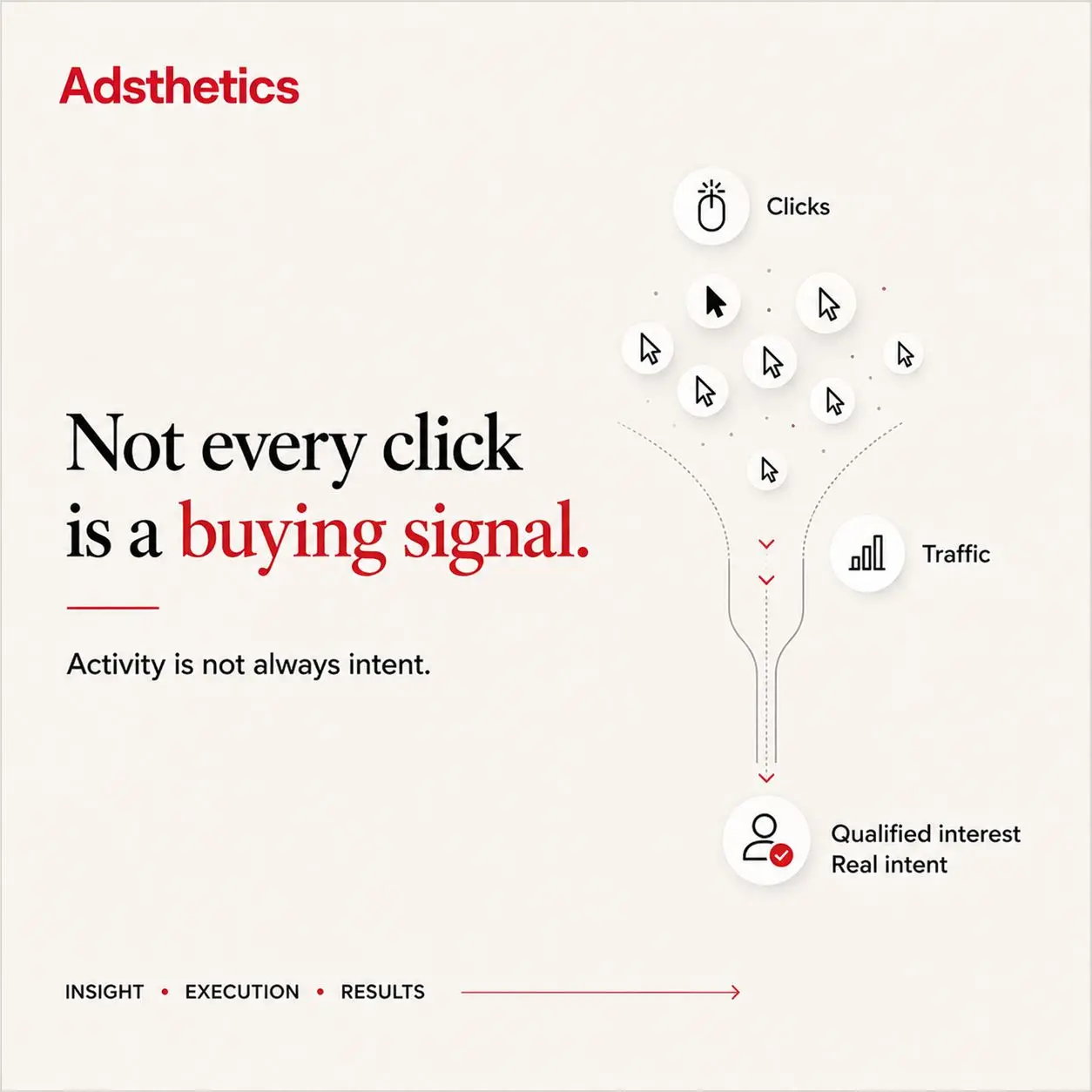
Click growth can signal attention without signalling commercial intent. The useful question is what visitors do—and who they are—after they arrive.
Clicks show that people noticed. They do not automatically show that people are ready to buy.
Why activity can look like progress
More clicks do not always mean more intent. A campaign can get attention and still miss the business goal. More clicks. More visits. More traffic. More activity.
At first, that can look like progress. But in advertising, activity does not always mean intent. Some people click because the creative is interesting.
Some click because the message is broad. Some click because the offer seems interesting, but not relevant enough to act on. Some click, compare, leave, and never return.
And some clicks come from people who were never the right fit in the first place. That is why click growth should not be treated as a success by itself. The better question is: What happens after the click?
Measure what happens after the click
Does the offer entice people to stay long enough to understand it? Do they proceed to the next step? Do they become qualified leads? Do they match the business’s actual customer profile?
Do they continue the conversation with real intent? If the answer is no, the campaign may not need “more traffic.” It may need a clearer message, a stronger offer, better audience alignment, or a landing page that supports the decision. Clicks can show that people noticed. But they do not always show that people are ready to move forward.
Good advertising is not just about attracting attention. It is about attracting the kind of attention the business can actually use.
A practical checklist
Visitor relevance
Check whether paid traffic matches the target customer's location, need, role and likely buying intent. Search terms, audience breakdowns and CRM outcomes can reveal when click growth comes from people the business cannot serve. Relevant traffic is more valuable than a larger volume of inexpensive visits.
Time spent understanding the offer
Use landing-page engagement as diagnostic evidence rather than a universal ranking score. Do visitors reach the key explanation, view proof, interact with pricing or return later? Very brief sessions can indicate weak intent or a mismatch between the ad promise and the page, while longer visits should still be connected to meaningful progression.
Next-step completion
Measure the action that represents genuine movement: a completed form, booking, quote request, product view or another relevant micro-conversion. A high click-through rate with weak next-step completion suggests that the message, offer or landing-page experience is failing to turn attention into intent.
Qualified lead rate
Calculate how many visitors become leads that meet the business's actual criteria, not merely how many submit a form. Compare qualified-lead rate by campaign, keyword, audience and creative. This shows which sources create commercially useful attention and which simply generate activity.
Sales feedback
Ask the sales team what prospects expected, which concerns they raised and why opportunities progressed or failed. This feedback can expose misleading creative, broad targeting or an unclear offer long before platform metrics do. Closing the loop between advertising and sales is essential for judging buying intent.
The takeaway
If traffic rises without qualified enquiries, investigate audience fit, creative promises, offer clarity and landing-page continuity before paying for more clicks.
Need a clearer view of what your advertising is proving? Talk to Adsthetics.