
Insight
The supplier entered advertising with an important search problem: commercial and consumer queries used many of the same keywords.
That overlap made conventional keyword targeting unreliable. Campaigns could generate apparently relevant clicks while reaching buyers with very different order value, requirements and sales potential.
The business was also unsure how to position itself beyond product availability.
Without a distinctive proposition, the account risked competing mainly on price and absorbing the cost of poorly qualified demand.
Product safety offered a credible advantage, but it had not yet been translated into a clear advertising system.
This reframed the problem:
The account needed to separate audiences through intent, message and landing experience—not keywords alone—and give commercial buyers a reason to prefer the brand.
Execution
We rebuilt the strategy around search-intent control and safety-led positioning.
Search terms were grouped by likely commercial context, purchase pattern and product need, with negative-keyword logic used to reduce avoidable B2C overlap.
Campaign structures separated high-value business demand from smaller consumer transactions so budget and bids could reflect commercial potential.
Landing pages and copy made the buyer context explicit earlier in the journey.
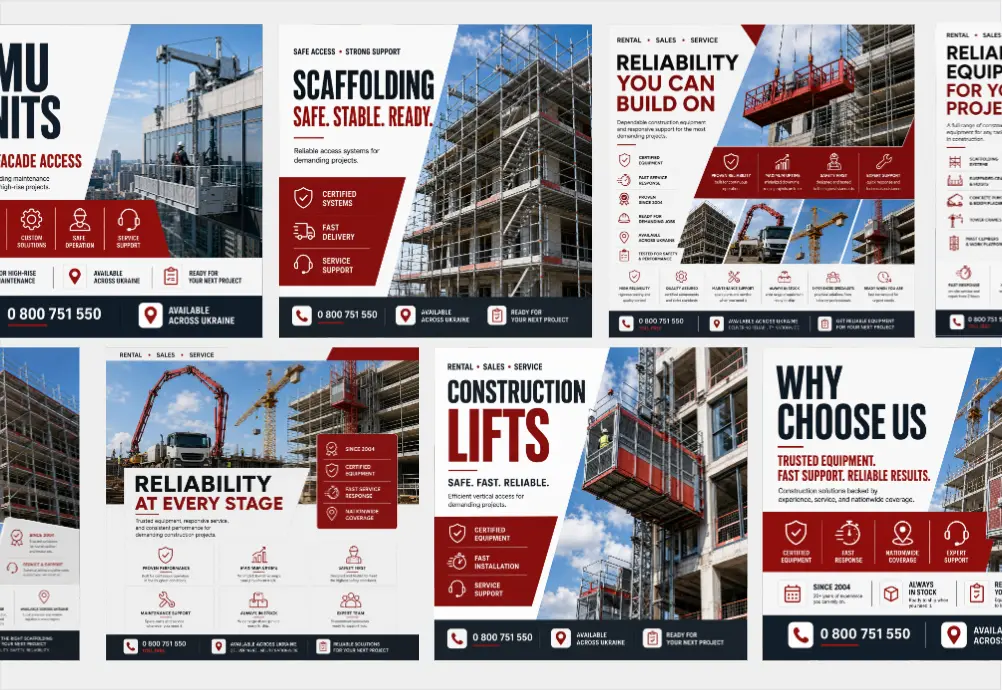
A new safety proposition translated product features into reduced risk, responsible operation and greater confidence for commercial purchasers.
Creative reinforced proof and practical reassurance rather than relying on generic equipment messages.
Google Ads captured active product demand while paid social extended the new positioning to relevant professional audiences.
Performance was evaluated through sales value and acquisition cost, exposing where superficially similar keywords produced different outcomes.
The resulting B2B advertising model combined:
- Intent segmentation → control B2B and B2C overlap
- Safety positioning → create a differentiated reason to choose
- Commercial measurement → prioritise valuable sales
Targeting and positioning now worked together to qualify demand before it reached the sales process.
Results
The clearer structure and proposition improved both growth and efficiency.
- Sales increased by 42%
- Acquisition costs finished 21% below competing benchmarks
- A distinctive safety-led position established
The business gained more control over ambiguous search demand and a stronger message for professional buyers.
The project showed that when keywords cannot fully identify a B2B customer, the proposition and conversion journey must complete the qualification.